BLOG
How to Reduce COD Dependency With Better Digital Payment Options
Learn how e-commerce businesses in Pakistan can reduce COD dependency with QR and card payments at delivery while keeping customer convenience.

Author
XPay
September 16, 2026
BLOG
Learn how e-commerce businesses in Pakistan can reduce COD dependency with QR and card payments at delivery while keeping customer convenience.
September 16, 2026
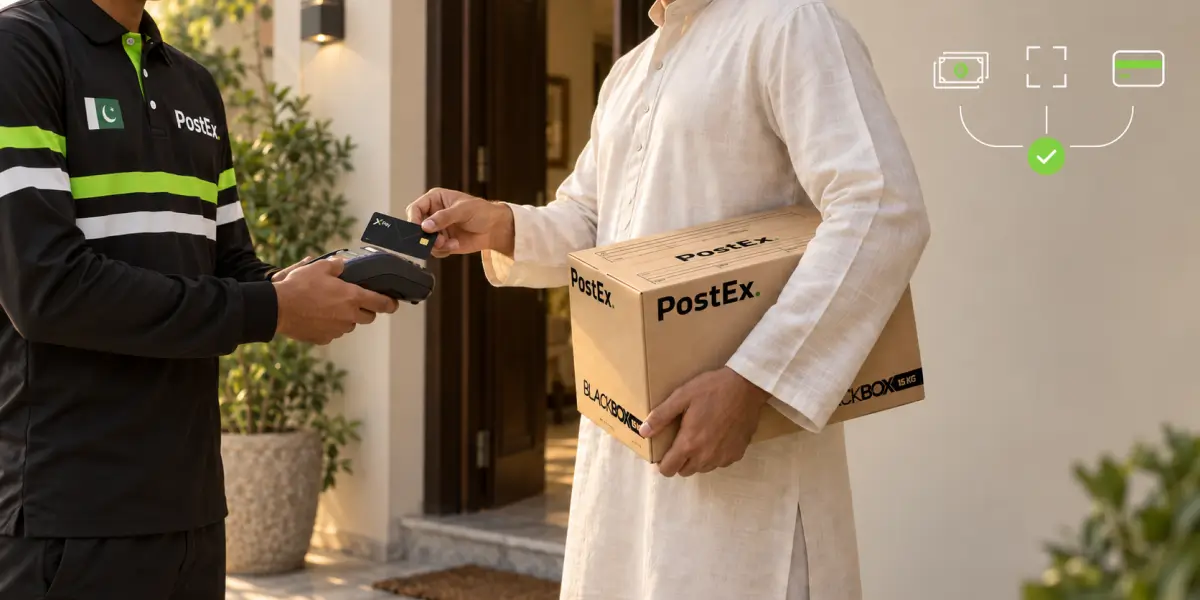
Cash on Delivery (COD) has been one of the biggest enablers of e-commerce in Pakistan. For many customers, paying when an order arrives feels safer than paying upfront, particularly when they are buying from a new online store.
But for e-commerce businesses, depending too heavily on cash can create operational and financial challenges. Cash has to be collected, reconciled and settled, while refused COD orders can add delivery and return costs.
The answer, however, isn't necessarily to eliminate COD.
The smarter approach is to make COD more digital.
Instead of giving customers only one choice, cash at the doorstep, businesses can offer cash, QR and card payments at delivery. This allows customers to maintain the confidence of Payment on Delivery while giving merchants a way to reduce physical cash dependency.
Trust is a major reason Pakistani customers continue to prefer Cash on Delivery.
Customers may hesitate to pay upfront because they are concerned about:
COD reduces some of this perceived risk. Customers can place an order without making an upfront payment and pay when the product reaches them.
According to PwC Pakistan's 2025 banking publication, COD accounts for approximately 80% of e-commerce payments in Pakistan, while digital payments for online purchases remain around 15–20%. PwC attributes the continued preference for COD partly to concerns around trust and refunds.
This makes one thing clear: asking every Pakistani customer to abandon COD overnight isn't realistic.
The opportunity is to improve the payment experience around COD.
For an e-commerce business, a COD order doesn't necessarily have to mean a cash transaction.
Traditionally, the journey looks like this:
Customer places COD order → Rider delivers → Customer pays cash
But there is another possibility:
Customer places COD order → Rider delivers → Customer chooses Cash, QR or Card
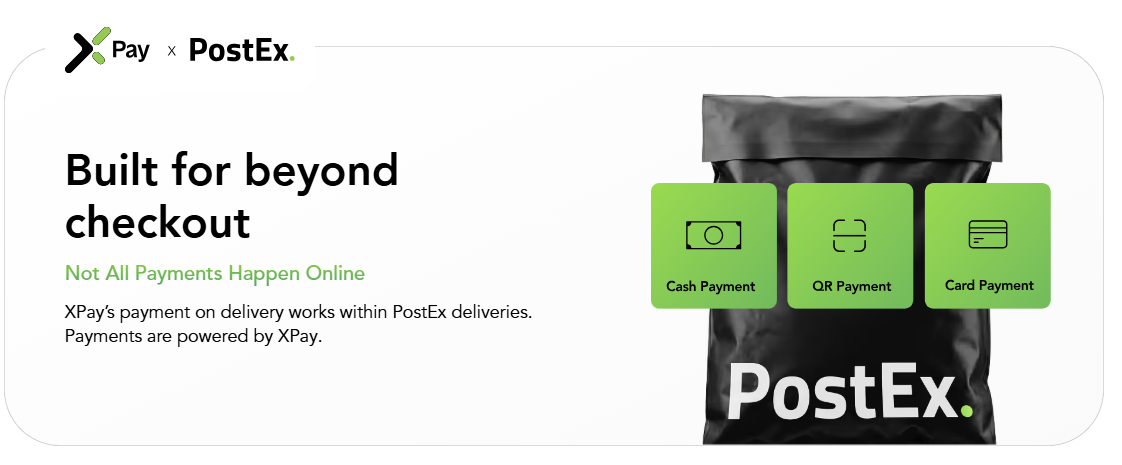
The order is still Payment on Delivery. The difference is that the customer now has a choice in how they pay.
This distinction can help businesses reduce their dependence on physical cash without removing a payment method that customers already trust.
Not necessarily.
For the Pakistani market, completely removing COD can create friction for customers who are not comfortable paying upfront.
A better strategy is to move from:
to:
Customers can still receive the product before making payment, but they can choose how they want to pay.
For example:
This creates a hybrid payment model that combines the trust of COD with the convenience of digital payments.
There are several ways e-commerce businesses can gradually increase digital payment adoption.
The first opportunity is before delivery.
Businesses can offer customers options such as:
The goal isn't to push every customer toward prepaid orders.
Instead, make digital payment a normal and visible option for customers who are already comfortable using it.
Some customers choose COD because there is no reason to choose anything else.
Businesses can experiment with incentives such as:
Even a small benefit can encourage customers who are already comfortable with digital payments to move away from cash.
This is particularly important for Pakistan.
Some customers may not want to pay before receiving an order, but that doesn't mean they want to use cash.
Imagine this experience:
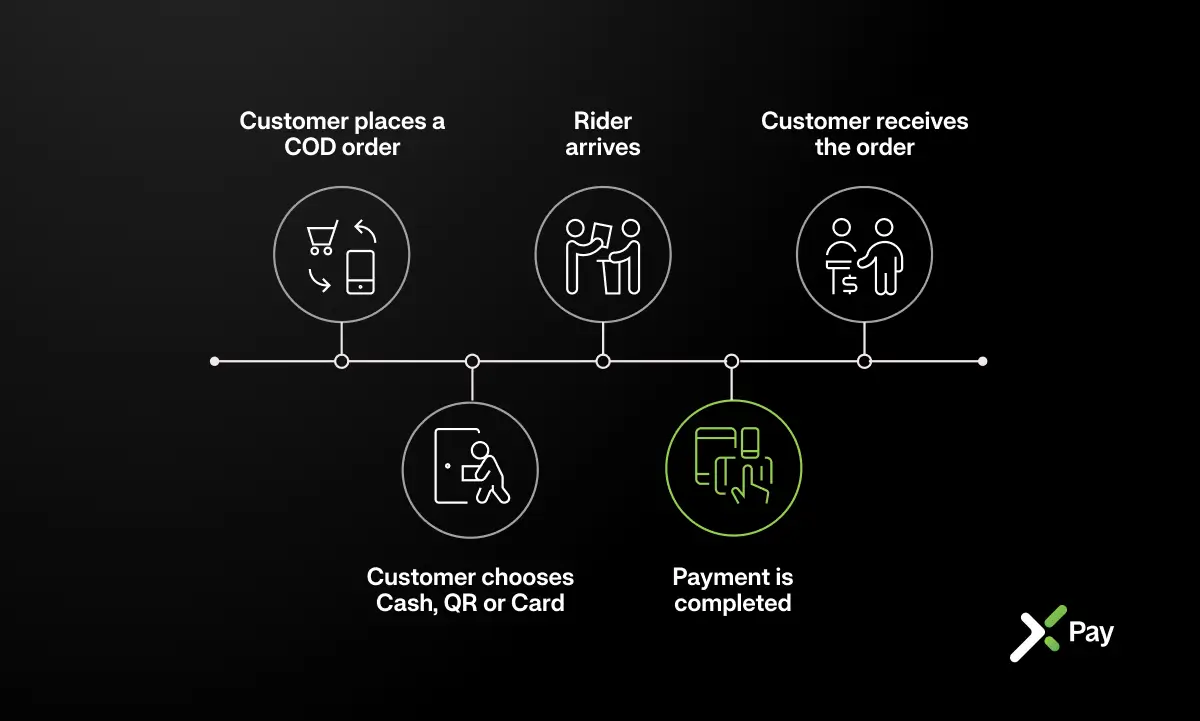
This gives customers the reassurance of Payment on Delivery without making physical cash the only option.
Digital Payment on Delivery extends the payment experience beyond the checkout page.
Instead of thinking of payment as something that happens only when an order is placed, businesses can allow customers to pay digitally when the order arrives.
This is particularly useful for customers who:
It effectively creates a bridge between traditional COD and digital commerce.
This is where Payment on Delivery can fit naturally into the e-commerce journey.
For PostEx deliveries, XPay enables customers to pay at the doorstep through QR codes or debit and credit cards. The payment is processed through XPay and an instant confirmation is shared.
The process is straightforward:
The customer chooses the familiar Cash on Delivery option.
The order is delivered through PostEx.
The customer can pay through QR or debit/credit card rather than relying only on cash.
The payment is processed through XPay.
The customer receives payment confirmation.
The result is simple:
COD doesn't have to mean cash-only.
Traditional payment gateways mainly focus on what happens when a customer clicks "Pay Now" online.
But e-commerce doesn't end at checkout.
The payment moment can also happen at the doorstep.
That's why the idea behind Payment on Delivery is:
Payment on Delivery works within PostEx deliveries, extending digital payment capabilities beyond the online checkout experience.
For merchants, this means they can keep the familiar Payment on Delivery model while introducing digital payment options at the point where the customer actually receives the order.
Customers can't choose a payment method they don't know exists.
Show digital payment options clearly during checkout and communicate them again during delivery.
A customer shouldn't have to navigate a complicated process at the doorstep.
QR scanning and card payments should be quick and intuitive.
Explain how payments work and provide clear confirmation after a transaction.
Trust is particularly important when trying to move customers away from traditional COD.
Test free delivery, discounts or loyalty benefits for customers who choose digital payment.
Keep cash available while customers become familiar with digital options.
The goal is to increase digital adoption, not create unnecessary checkout friction.
Businesses that currently receive most orders through COD don't need to transform their payment strategy overnight.
A gradual approach can work better.
Find out what percentage of your orders and revenue comes from COD.
Make cards, QR and other relevant payment methods available.
Give customers the option to pay digitally when their order arrives.
Experiment with discounts, free delivery or loyalty benefits.
Monitor:
Repeat customers who are already comfortable with digital payments may be easier to move toward prepaid transactions.
The objective is not necessarily to reach 0% COD.
The objective is to reduce unnecessary dependence on physical cash.
The opportunity for digital payments is becoming increasingly significant in Pakistan.
According to the State Bank of Pakistan's Q2 FY2025-26 Payment Systems Review, 92% of retail transactions by volume were conducted through digital payment channels during October–December 2025. The quarter recorded 305.1 million e-commerce transactions worth PKR 422 billion, while the number of QR-enabled stores reached 1.9 million.
Raast is also expanding the country's digital payment infrastructure, with 2.1 million merchants registered on Raast P2M as of the quarter covered by the report.
At the same time, COD remains deeply embedded in online shopping behaviour. This creates an important opportunity for e-commerce businesses:
Don't force customers to choose between COD and digital payments. Give them both.
The difference can be simple.
The hybrid model doesn't ask customers to change their behaviour immediately.
It simply gives them a better option.
COD has played an important role in building trust in Pakistan's e-commerce market.
It isn't going away simply because digital payments are growing.
Instead, COD can evolve.
The future customer journey could look like this:
Shop Online
↓
Choose Payment on Delivery
↓
Receive Order
↓
↓
Payment Confirmed
This approach gives customers the flexibility they expect while helping merchants reduce their dependence on physical cash.
For businesses using PostEx deliveries, Payment on Delivery provides a way to bring digital payments into this final stage of the customer journey. Customers can pay at the doorstep through QR or debit/credit cards, while payments are powered by XPay.
As Pakistan's e-commerce and digital payment ecosystems continue to evolve, businesses that give customers more ways to pay can create a smoother experience while reducing the operational burden of cash.
Not all payments happen online.
And with the right payment infrastructure, they don't have to happen in cash either.
Explore Payment on Delivery →
Payment on Delivery
Offer customers a faster, secure checkout experience without redirects. From cards and wallets to payment links. XPay helps you reduce drop-offs and get paid reliably.
Get Free Demo