BLOG
Redirect vs On-site Checkout: Which One Is Killing Your Sales in Pakistan?
Redirect checkouts are causing cart abandonment in Pakistan; On-site payments boost conversions and improve mobile shopping experience.

Author
XPay
March 25, 2026
BLOG
Redirect checkouts are causing cart abandonment in Pakistan; On-site payments boost conversions and improve mobile shopping experience.
March 25, 2026
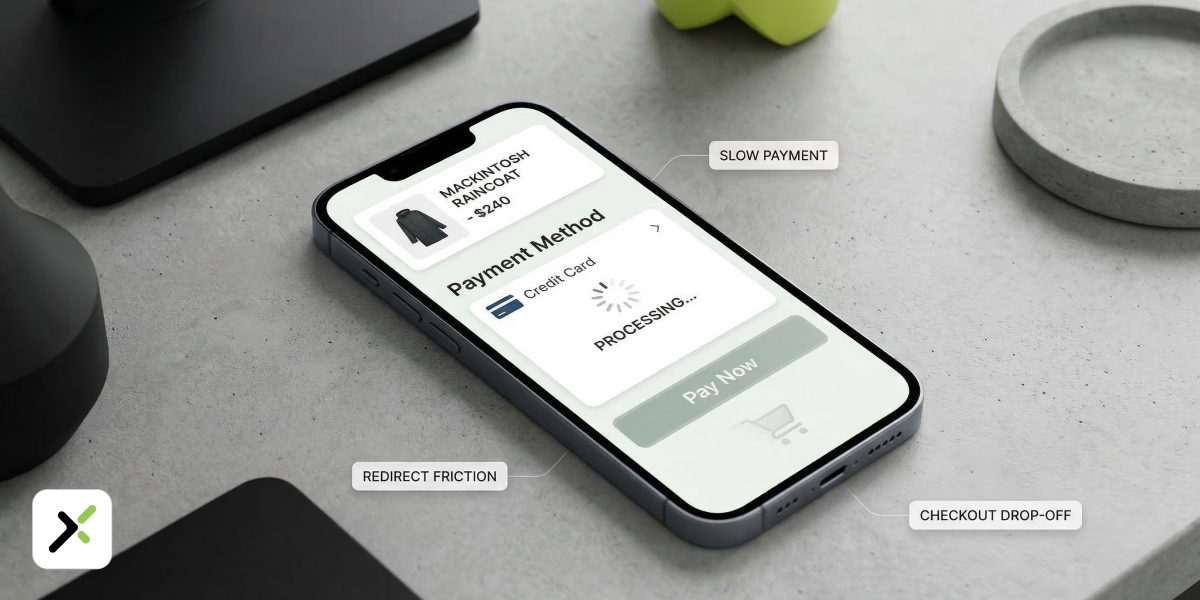
Pakistan’s e-commerce industry is growing fast. Online stores are scaling, digital payments are increasing, and more customers are shopping from their phones than ever before.
But there’s a hidden problem many businesses don’t notice until it’s too late.
Your checkout flow might be killing your sales.
Many Pakistani online stores lose customers at the final step, the payment page. Customers add items to their cart, reach checkout, and then suddenly disappear.
Why?
One of the biggest reasons is redirect-based payment gateways.
In this article, we’ll break down:
Let’s dive in.
The checkout stage is the most sensitive moment in the buying journey.
At this stage, the customer has already:
But one bad experience at checkout can instantly destroy that trust.
Studies show that a large percentage of revenue is lost during checkout due to failed payments and poor payment flows.
Some common problems include:
In Pakistan, where over 80% of e-commerce traffic comes from mobile users, even a few extra seconds of friction can cause customers to abandon the purchase.
This brings us to the biggest debate in modern payment design:
Redirect checkout vs on-site checkout.
Redirect checkout is the traditional payment gateway model used by many banks and payment providers.
Here’s how it works:
Customer → Store Checkout → Redirect to Gateway → Payment → Redirect Back
While this method is easy to implement, it comes with several serious problems.
When customers leave your website to complete payment, it creates friction.
They suddenly see:
This often confuses.
Customers may think:
“Did I leave the website?”
“Is this secure?”
“Did something go wrong?”
That hesitation is enough to stop many buyers.
Pakistan still faces inconsistent internet speeds, especially on mobile networks.
If a redirected payment page takes too long to load, users often leave.
Redirect delays can increase checkout times dramatically compared to modern embedded checkouts.
Even a few extra seconds can result in lost conversions.
Redirect-based payment flows are a major contributor to checkout drop-offs.
Research shows that 20–30% of users abandon checkout due to payment flow interruptions, especially when redirects are involved.
That means your store might be losing one out of every four customers.
Imagine this scenario.
A customer clicks pay on your fashion store and suddenly lands on an unfamiliar bank page.
They might wonder:
Is this safe?
Is this a scam?
Should I trust this page?
When trust drops, conversion drops.
On-site checkout (also called embedded checkout) allows customers to complete payment directly inside your website.
There are no redirects.
The entire payment experience happens within your store’s interface.
Customer → Store Checkout → Payment Form → Payment Complete
Everything stays within your website.
Modern payment platforms are shifting toward on-site payment experiences because they dramatically improve conversions.
Let’s look at why.
On-site checkout keeps the entire payment journey inside your website.
Customers never leave your store.
This creates a smooth and uninterrupted buying experience, reducing friction and increasing trust.
Embedded payments are optimized for speed.
Instead of loading external pages, the payment form loads instantly within the checkout page.
This reduces payment time and improves completion rates.
On-site payment flows can significantly increase payment success.
Platforms offering on-site checkout report conversion improvements of up to 35% because customers don’t leave the store during payment.
For growing e-commerce brands, that difference can translate into millions in additional revenue.
Pakistan is a mobile-first e-commerce market.
Long redirect forms are frustrating on mobile screens.
On-site payment systems support:
This makes checkout easier for mobile shoppers.
Modern on-site payment systems use advanced security technologies such as:
Tokenization replaces real card data with secure tokens, reducing exposure to fraud while enabling faster repeat purchases.
One solution designed specifically for Pakistani businesses is XPay, a modern payment gateway built to optimize checkout performance.
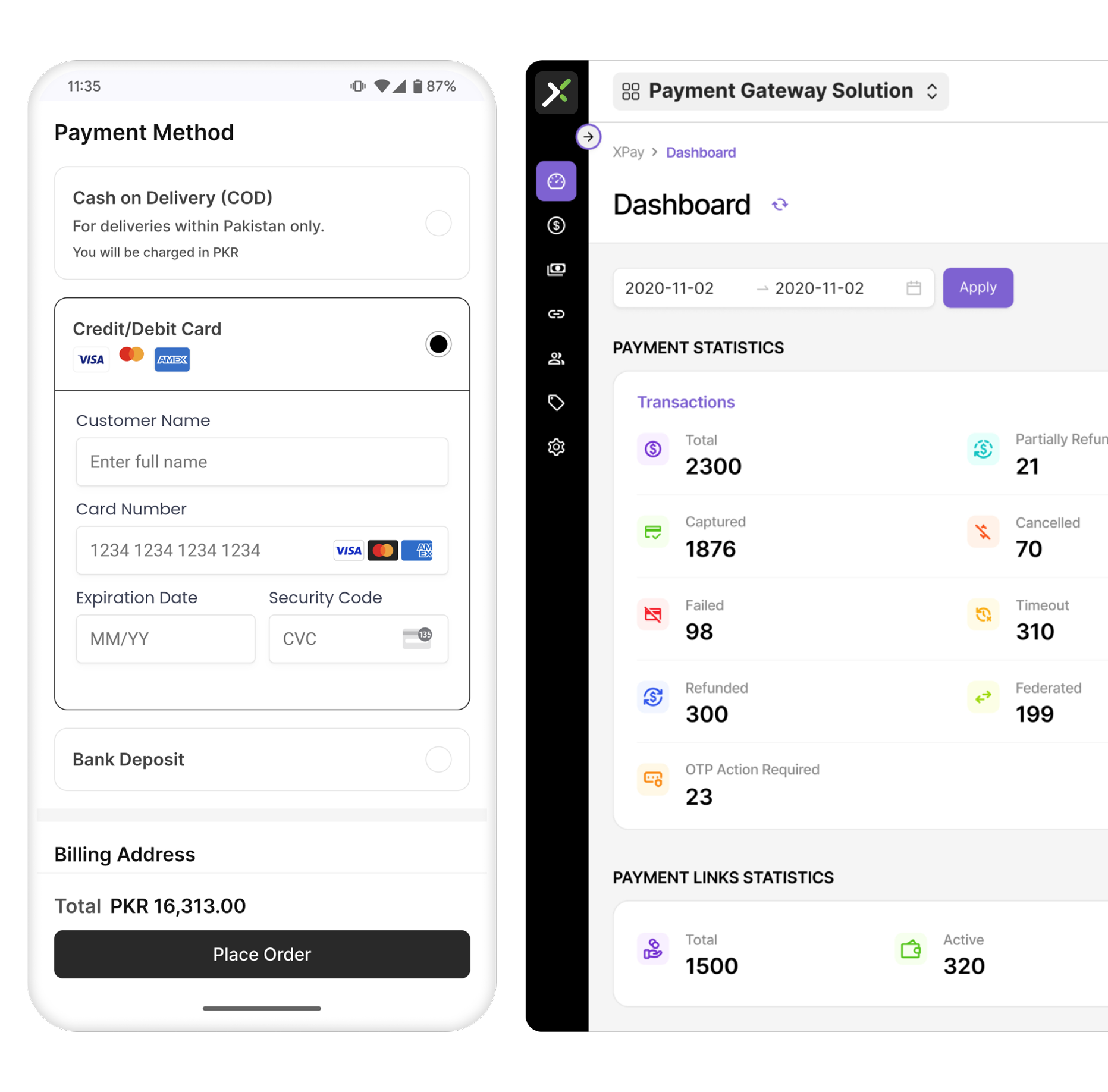
Unlike traditional gateways, XPay enables embedded on-site payments, allowing customers to complete transactions without leaving your website.
Key capabilities include:
Customers pay directly on your website with no redirects.
Transactions are routed through the most efficient channels to increase approval rates.
Securely store customer payment details for faster repeat purchases.
AI-powered fraud detection monitors transactions using device data, IP checks, and behavioral patterns.
Businesses can accept:
All through one integration.
For modern e-commerce businesses, the difference is clear.
Pakistan’s digital commerce market is expected to grow rapidly over the next few years.
But success won’t depend only on marketing.
It will depend on checkout optimization.
Brands that optimize payments will:
In many cases, simply switching from redirect payments to on-site checkout can dramatically improve performance.
Your checkout page is the last step between interest and revenue.
Every extra step, redirect, or delay increases the chance of losing a customer.
Redirect payments may have worked in the past.
But modern e-commerce demands fast, seamless, on-site checkout experiences.
For Pakistani businesses looking to increase conversions, on-site payment solutions like XPay offer a powerful way to reduce friction, improve trust, and convert more visitors into paying customers.
Offer customers a faster, secure checkout experience without redirects. From cards and wallets to payment links. XPay helps you reduce drop-offs and get paid reliably.
Get Free Demo




.svg)