BLOG
PCI Compliance Explained: What Ecommerce Businesses Need to Know
Understand PCI compliance for ecommerce, its security requirements, and how XPay helps protect card payments with tokenization and fraud prevention.

Author
XPay
September 29, 2026
BLOG
Understand PCI compliance for ecommerce, its security requirements, and how XPay helps protect card payments with tokenization and fraud prevention.
September 29, 2026
When a customer enters their debit or credit card details on your ecommerce store, they expect their payment information to be safe.
For business owners, this creates an important question:
Who is responsible for protecting customer card data?
This is where PCI DSS comes in.
PCI DSS, or Payment Card Industry Data Security Standard, is a security standard designed to protect payment card information.
If your ecommerce business accepts card payments, understanding PCI compliance can help you choose the right payment setup, reduce security risks and build customer trust.
PCI compliance means following the security requirements designed to protect payment card data.
These requirements cover areas such as:
You don't need to become a cybersecurity expert to understand PCI compliance.
As an ecommerce owner, the most important question is:
How is my customer's card information being handled during checkout?
Imagine a customer purchases a product for Rs. 10,000 from your online store.
They enter their card details and click Pay.
The payment information may pass through several systems:
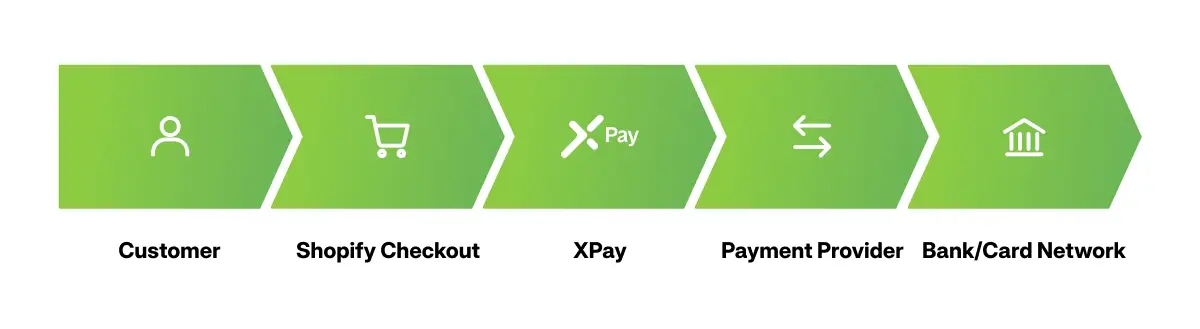
Every part of this payment journey needs appropriate security controls.
A payment data breach can result in:
For an ecommerce business, payment security is therefore not just a technical issue. It is a business issue.
Yes, but your payment gateway can significantly reduce the amount of card data your business handles.
This is an important distinction.
If your own systems directly handle or store card information, your PCI DSS responsibilities can be more extensive.
With an appropriately designed third-party payment integration, the payment provider can handle much of the sensitive payment processing environment.
However:
Using a PCI DSS compliant payment provider does not automatically make the entire ecommerce business PCI compliant.
Your responsibilities depend on how your website, checkout and payment integration are configured.
That's why merchants should ask their payment provider exactly what they handle and what remains the merchant's responsibility.
You don't need to understand every technical PCI requirement.
Instead, ask your payment provider these five questions.
Ask for the provider's current PCI DSS validation or compliance documentation.
Ideally, merchants should avoid storing sensitive card information unless there is a legitimate business requirement and appropriate security controls.
Understand how the payment page works and where customers enter their card details.
PCI compliance and fraud prevention are different things, but both matter for ecommerce payments.
This is one of the most important questions.
Ask the provider:
"What PCI responsibilities remain with my business after I integrate your payment solution?"
For Shopify businesses, payment security should be considered as part of the overall checkout setup.
A typical payment flow looks like:
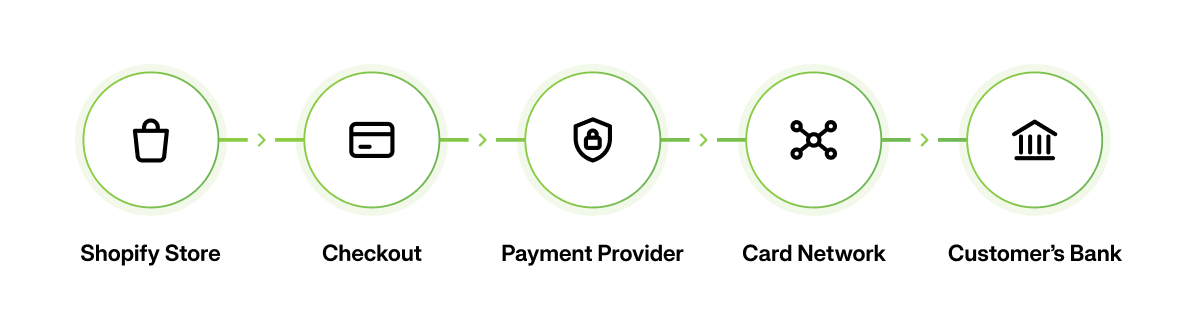
The less sensitive card data your own systems directly handle, the simpler your payment environment can potentially become.
However, your Shopify store still needs to be maintained securely.
Business owners should pay attention to:
These terms are often confused.
PCI DSS is a security standard.
Encryption protects data while it is being transmitted or stored.
Tokenization replaces sensitive card information with a token.
3D Secure adds an additional authentication step for supported card transactions.
Fraud monitoring helps identify potentially suspicious transactions.
A good payment setup can use several of these technologies together.
Before accepting online card payments, check these basics:
Payment Provider
☐ Uses an appropriate PCI DSS compliant environment
☐ Provides current compliance documentation
☐ Clearly explains merchant responsibilities
Website
☐ Uses HTTPS
☐ Keeps Shopify/CMS and apps updated
☐ Removes unnecessary plugins and scripts
☐ Protects admin accounts with strong authentication
Payment Data
☐ Avoids unnecessary card data storage
☐ Understands where card information is processed
☐ Uses secure payment integrations
Operations
☐ Monitors payment activity
☐ Has a process for failed payments and refunds
☐ Reviews payment provider security regularly
For Pakistani ecommerce businesses, XPay by PostEx provides payment infrastructure designed for online businesses.
XPay highlights capabilities including:
The goal is to give businesses a payment setup where security is built into the payment infrastructure rather than requiring merchants to build their own card-processing environment.
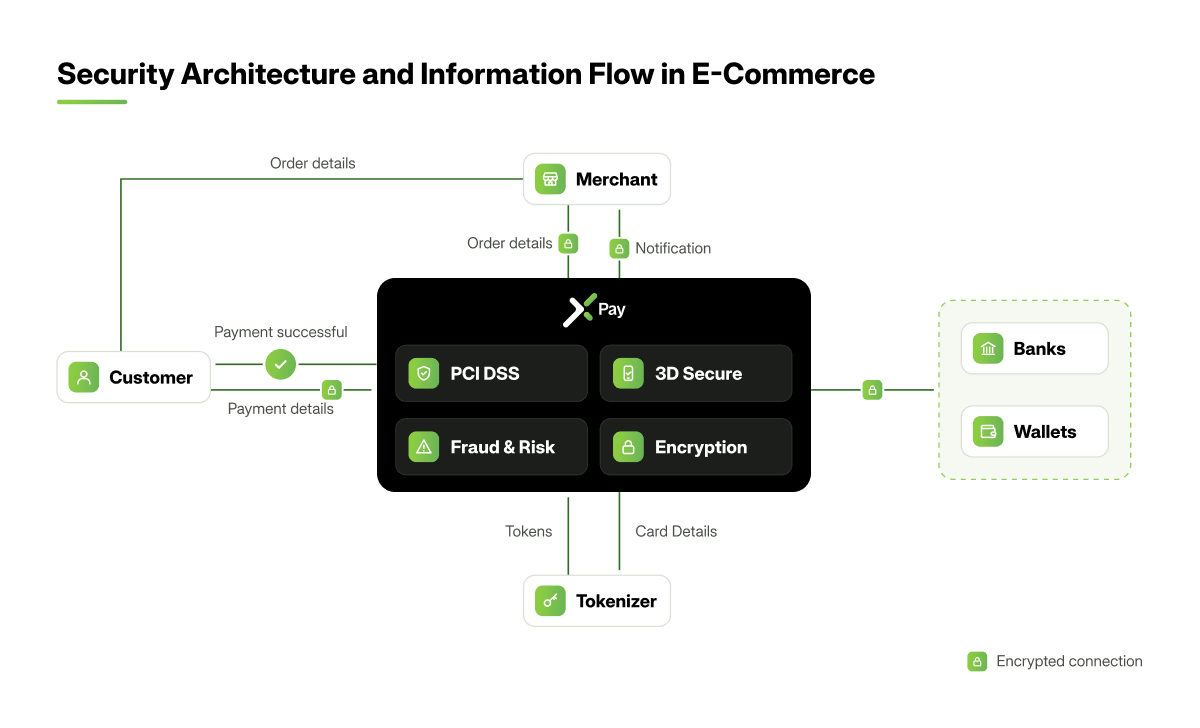
For a Shopify merchant, the payment journey can look like:
Customer → Shopify Checkout → XPay → Payment Provider → Bank/Card Network
This allows the merchant to focus on selling and managing the customer experience while the payment infrastructure handles the transaction.
You don't need to become a PCI security expert.
You need to make sure your payment setup answers three basic questions:
1. Is my payment provider using an appropriate PCI DSS compliant environment?
2. Am I unnecessarily handling or storing customer card information?
3. Do I clearly understand my own PCI responsibilities?
If the answer to all three is clear, you're already approaching payment security from the right business perspective.
PCI compliance is about protecting your customers' payment information and reducing the risks associated with card payments.
For ecommerce businesses in Pakistan, the easiest way to approach it is to choose a payment provider with an appropriate security and compliance framework and understand what responsibilities remain with your business.
With features such as PCI-DSS security, tokenization, 3D Secure authentication, fraud protection and ecommerce integrations, XPay is built to help businesses manage online payments without building their own payment infrastructure from scratch.
Want to accept online payments with a payment solution built for ecommerce?
Explore XPay by PostEx and see how you can set up secure payment acceptance for your online business.
Offer customers a faster, secure checkout experience without redirects. From cards and wallets to payment links. XPay helps you reduce drop-offs and get paid reliably.
Get Free Demo