BLOG
What is MDR in Pakistan and How Does it Affect Ecommerce?
Understand MDR in Pakistan, its impact on ecommerce profit margins and how to evaluate payment processing costs with XPay by PostEx.

Author
XPay
October 19, 2026
BLOG
Understand MDR in Pakistan, its impact on ecommerce profit margins and how to evaluate payment processing costs with XPay by PostEx.
October 19, 2026

For ecommerce businesses in Pakistan, accepting digital payments involves more than choosing a payment gateway. Payment processing arrangements can affect how transactions are handled, how funds are settled and how businesses manage their operating costs.
Whether customers pay through debit or credit cards, digital wallets or bank-based payment options, merchants should understand the terms associated with each payment method.
This is where MDR (Merchant Discount Rate) becomes important. MDR is a merchant fee associated with processing eligible payment transactions, commonly expressed as a percentage of the transaction value. The applicable charges and terms can vary by provider, payment method and merchant agreement.
In this guide, we explain what MDR means in Pakistan, how it works, how it can affect e-commerce businesses and what merchants should consider when evaluating digital payment options.
MDR stands for Merchant Discount Rate. It is a fee charged to a merchant for processing an eligible payment transaction, commonly calculated as a percentage of the transaction value.
When a customer pays for an online order using a debit or credit card, the transaction passes through the relevant payment processing infrastructure before funds are settled with the merchant. The merchant may incur a processing fee under the terms agreed with their payment provider.
MDR is one factor businesses should consider when choosing how to accept digital payments. However, it is important to distinguish payment processing costs from other business expenses, such as product costs, fulfilment, marketing, taxes and platform charges.
The applicable pricing structure depends on the provider, the payment method and the merchant's agreement. Different payment methods may have different fee structures, so merchants should review the terms relevant to their own setup.

Pakistan's digital payment ecosystem includes local debit and credit cards, international cards, mobile wallets, bank transfers and Raast merchant payments.
These options can involve different processing arrangements, settlement processes and commercial terms. Before selecting a payment solution, merchants should understand which payment methods are supported and what conditions apply to each.
Local card payments allow customers to pay using eligible debit or credit cards issued by banks operating in Pakistan.
For e-commerce businesses, card acceptance provides customers with an alternative to cash on delivery and allows them to complete eligible purchases through the online checkout.
Merchants should review the applicable processing terms, settlement arrangements and payment acceptance requirements with their provider. They should also monitor payment success rates and customer checkout experience when assessing the value of card payments.
International card payments allow eligible customers to purchase products using cards issued outside Pakistan, subject to the provider's supported markets and transaction rules.
This capability can be useful for ecommerce businesses serving overseas customers or operating international sales channels.
International transactions may be subject to different processing terms, currency conversion arrangements or additional charges, depending on the provider and transaction. Merchants should confirm supported currencies, settlement arrangements and any applicable conditions before enabling international payments.
Digital wallets provide customers with another way to pay online. In Pakistan, commonly used options include JazzCash and other supported mobile wallet services.
Wallet payments can offer a convenient checkout option for customers who prefer using their mobile wallets. The available services and applicable commercial terms depend on the payment provider and merchant arrangement.
Businesses should evaluate wallet acceptance alongside customer preferences, payment success rates, reconciliation processes and settlement requirements.
Raast is Pakistan's instant payment system developed by the State Bank of Pakistan. Its Person-to-Merchant (P2M) service supports merchant payments through methods such as QR codes, Request to Pay, merchant aliases and IBANs.
Raast provides another option for merchants looking to accept digital payments. Availability, integration methods and merchant charges depend on the relevant framework and provider arrangements.
For the latest official information, visit the State Bank of Pakistan's Raast P2M page. Merchants should confirm current availability and applicable terms with their payment provider.
Payment processing costs can affect the amount a merchant retains from digital transactions. Their impact depends on the merchant's payment mix, transaction volume, pricing terms and overall business costs.
Applicable processing fees can reduce the amount settled to a merchant from a successful digital transaction.
Merchants should account for payment processing alongside product costs, packaging, shipping, marketing expenditure, taxes, refunds and other operating expenses. The amount remaining after payment processing should not be confused with net profit.
Businesses need a clear understanding of their payment-related costs when assessing product margins and financial performance.
Reviewing actual transaction reports and settlement statements can help merchants understand how payment costs fit into their broader operating expenses. Businesses should base financial planning on their own provider terms and transaction mix rather than assumptions about standard rates across the market.
As transaction activity grows, payment processing costs can become a significant part of operating expenses.
Merchants should regularly review transaction volumes, payment method usage and settlement reports to understand how their payment arrangements affect the business. This can help finance teams plan more accurately as the business scales.
International sales can involve different processing arrangements, supported currencies and settlement requirements.
Businesses targeting customers outside Pakistan should understand their provider's international payment capabilities and any applicable currency conversion or cross-border terms. Reviewing these factors helps merchants assess the operational requirements of serving overseas customers.
Payment-related terminology can be confusing because different charges may apply to different parts of the payment process.
Not every provider charges all these fees separately. Some arrangements combine services, while others list charges individually.
Merchants should review their provider agreement to understand which fees apply, how they are calculated, when settlements take place and whether any additional taxes or charges may be relevant.
The right payment mix depends on customer preferences, transaction requirements, the business model and the payment options supported by a merchant's provider.
No single payment method is the best fit for every ecommerce business. A merchant serving primarily domestic customers may prioritise local cards, wallets and available bank-based payment options. A business serving international customers may also need broader card acceptance.
The goal is to choose payment options that suit the target audience while considering availability, customer experience, settlement processes and the terms offered by the payment provider.
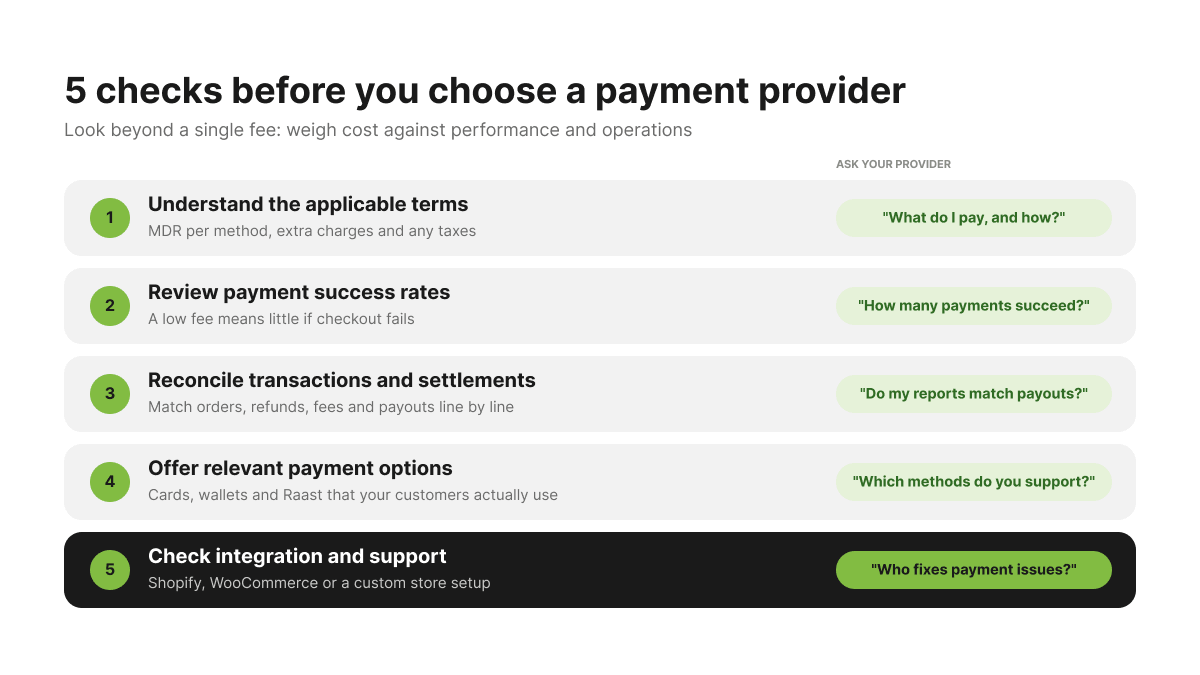
Merchants should look beyond a single fee when comparing payment providers. A useful assessment considers the overall cost and the operational value of the payment solution.
Ask the provider to clarify the terms for each supported payment method, including any separate service, integration or other applicable charges. Confirm how fees are applied and whether additional taxes or conditions may affect the arrangement.
A payment option's value is not determined by cost alone. Merchants should also consider how reliably customers can complete checkout.
Monitoring failed transactions and payment performance can help businesses identify issues that may affect completed orders and the customer experience.
Businesses should compare order records with payment confirmations, refunds, processing records and settlement statements.
Accurate reconciliation helps finance teams understand collected revenue and the amounts transferred to the merchant's account.
Providing payment methods that match customer preferences can make checkout more convenient. Merchants should assess their audience and offer suitable options supported by their payment provider.
The payment solution should work with the merchant's ecommerce platform and operational processes. Businesses should confirm integration compatibility, technical support arrangements and the steps required to manage payment issues.
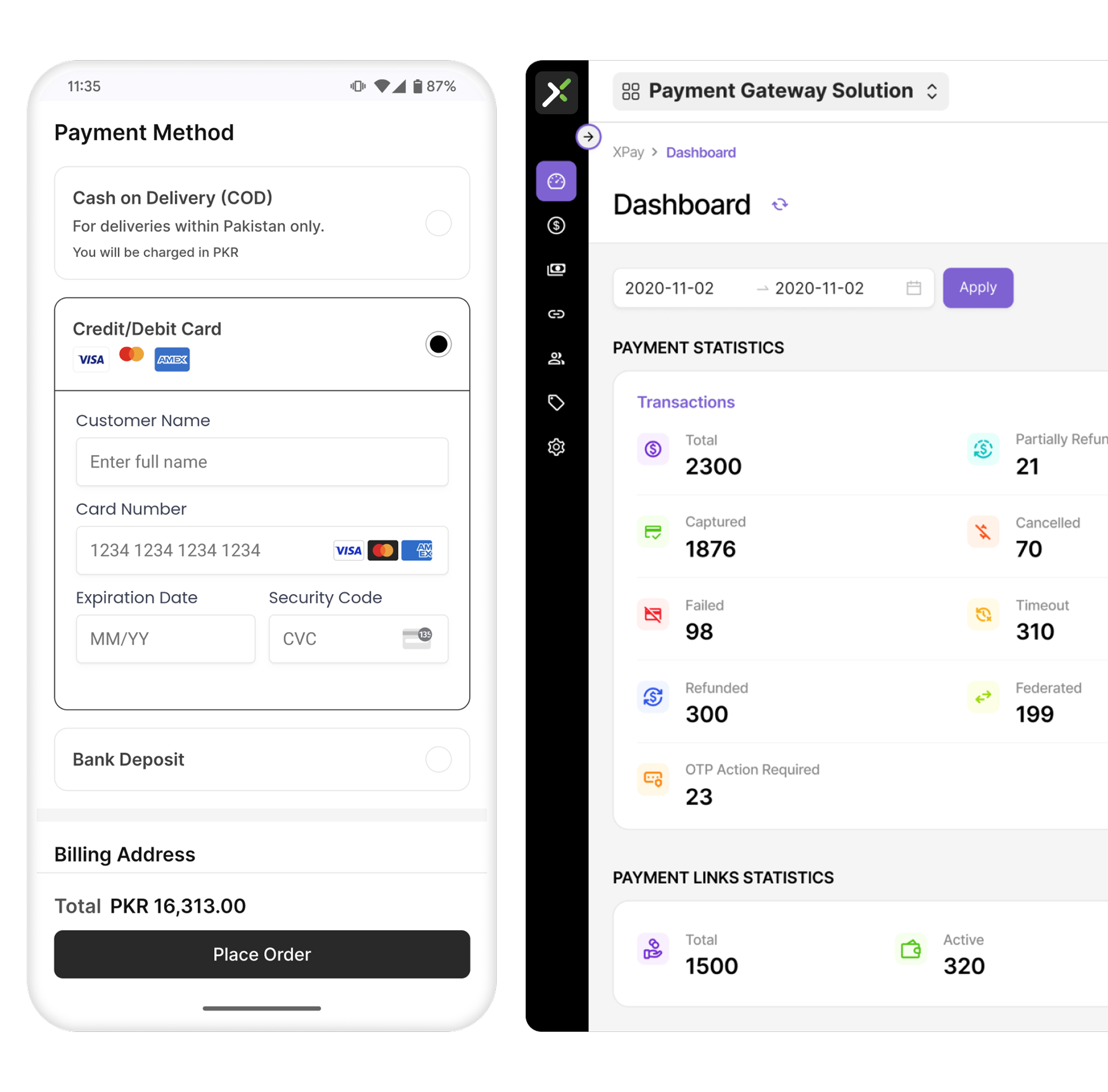
XPay by PostEx offers a payment solution for ecommerce businesses looking to manage digital payment acceptance through supported payment methods and integrations.
XPay provides information about its payment solution and supported integrations for platforms including Shopify, WooCommerce and custom ecommerce setups. Available payment methods and configurations depend on the merchant's requirements and the provider's current offering.
Businesses evaluating XPay should discuss their payment needs with the team to understand the supported setup, onboarding requirements, settlement arrangements and applicable commercial terms for their business.
Simplify Payments. Grow Faster.
Connect with XPay
MDR stands for Merchant Discount Rate. It is a merchant fee associated with processing eligible payment transactions, commonly expressed as a percentage of the transaction value.
When a customer pays through an eligible payment method, the transaction is processed through the relevant payment infrastructure. Depending on the merchant's agreement, a processing fee may apply before funds are settled.
The merchant generally bears the applicable processing fee under the payment processing agreement. The exact contractual arrangement and any customer-facing charges depend on the provider's terms and relevant regulations.
Not necessarily. Providers may use different commercial terms for local and international card transactions. Merchants should confirm the terms that apply to their account and target markets.
They can be. Wallet payments may have a different pricing structure from card transactions. Merchants should confirm the applicable terms for each payment method they plan to offer.
Merchant charges and applicable incentives depend on the current regulatory framework and provider arrangements. Merchants should check the latest official guidance and confirm the current terms with their payment provider.
Yes. Depending on the provider and arrangement, separate gateway, integration, platform or other charges may apply. Merchants should review the full terms rather than assume all services are covered by one fee.
Businesses should consider supported payment methods, integration compatibility, transaction performance, settlement arrangements, reconciliation tools, customer experience, support and the commercial terms offered by the provider.
Understanding MDR helps ecommerce businesses assess payment processing as part of their wider financial and operational planning.
Cards, wallets and Raast can serve different customer needs, but their availability, processing arrangements and terms should be evaluated separately. By reviewing payment performance, integration requirements and settlement processes alongside the applicable commercial terms, merchants can make a more informed decision.
Looking for an on-site payment checkout solution for your ecommerce business?
XPay by PostEx offers on-site checkout in Pakistan, allowing customers to complete card payments directly on your website without being redirected to an external payment page. This creates a smoother checkout experience while helping businesses maintain customers on their own storefront.
Offer customers a faster, secure checkout experience without redirects. From cards and wallets to payment links. XPay helps you reduce drop-offs and get paid reliably.
Get Free Demo